You deserve compassion. You also deserve honesty.
You don’t need someone to tell you everything you want to hear.
At No Shame Recovery Counseling, I believe two things can be true at once:
You deserve unconditional respect, and you’re responsible for the change you want to see.
I’m not here to judge you, lecture you, or tell you how to live your life. I’m here to help you understand yourself, recognize what’s keeping you stuck, and develop the tools to do something different.
Telehealth Counseling for Addiction and Mental Health for Adults in New Hampshire.
I Don’t Just Understand Recovery Professionally. I’ve Lived It.
I’ve been in recovery for 13 years. I know firsthand that recovery isn’t always pretty, progress isn’t always linear, and change takes more than good intentions. I also know that shame doesn’t create lasting change. Accountability does.
My personal recovery experience, combined with my professional training as a Master Licensed Alcohol and Drug Counselor (MLADC), shapes how I work with clients. I understand the importance of being heard without judgment, but I also know the value of having someone willing to challenge you when you’re getting in your own way.
I’m not here to tell you recovery is easy. I’m here to help you recognize that change is possible—and that you’re capable of doing the work to get there.
No Judgment Doesn’t Mean No Accountability. You can understand why you developed certain patterns without continuing to excuse them.
You can acknowledge the impact of trauma, relationships, and life experiences while still taking responsibility for what happens next.
And you can be compassionate toward yourself without avoiding difficult truths.
I offer a straightforward, collaborative approach to counseling. I’ll meet you where you are. We’ll look at the patterns, beliefs, emotions, and behaviors that keep showing up in your life—and figure out what you want to do differently.
No shame. Real change.

What We Can Work On
Substance Use & Recovery
Whether you’re questioning your substance use, working toward sobriety, or trying to maintain recovery, we’ll explore the patterns and triggers behind your choices and build practical strategies for change.
Anxiety, Depression, Personality Disorders & Emotional Health
Work on managing difficult emotions, challenging unhelpful thinking, improving distress tolerance, and developing healthier ways to respond to stress.
Relationships, Boundaries & Self-Worth
Explore people-pleasing, codependency, unhealthy relationship patterns, difficulty setting boundaries, and the beliefs that influence how you see and treat yourself.
Breaking Patterns & Building Accountability
Recognize the behaviors and decisions that keep getting in your way. Learn how to take responsibility without getting trapped in shame, guilt, or self-criticism.

Leaving Residential Treatment or PHP? Let’s Keep the Momentum Going.
Getting out of treatment is one thing. Figuring out how to use what you’ve learned once you’re outside the bubble is another.
I’ve worked extensively with people in residential substance use treatment, including those preparing to transition to Partial Hospitalization Programs (PHP) and lower levels of care.
I know how much work goes into treatment. I also know that leaving a structured environment and returning to everyday life can be a whole different challenge.
Suddenly, you’re navigating old triggers, complicated relationships, responsibilities, and the same environments where unhealthy patterns developed. And now you’re expected to put everything you’ve learned into practice.
Knowing your coping skills and actually using them when life gets messy are two very different things.
That’s where I can help.
Whether you’re stepping down from residential treatment, PHP, or IOP we can build on the work you’ve already started, strengthen your relapse prevention plan, address underlying mental health concerns, and figure out how to make recovery work in your actual life—not just in a treatment setting.
You don’t have to start over with someone who needs the entire treatment process explained to them.
And you don’t have to navigate the transition alone.
Treatment helped you build the foundation. Let’s work on what comes next.
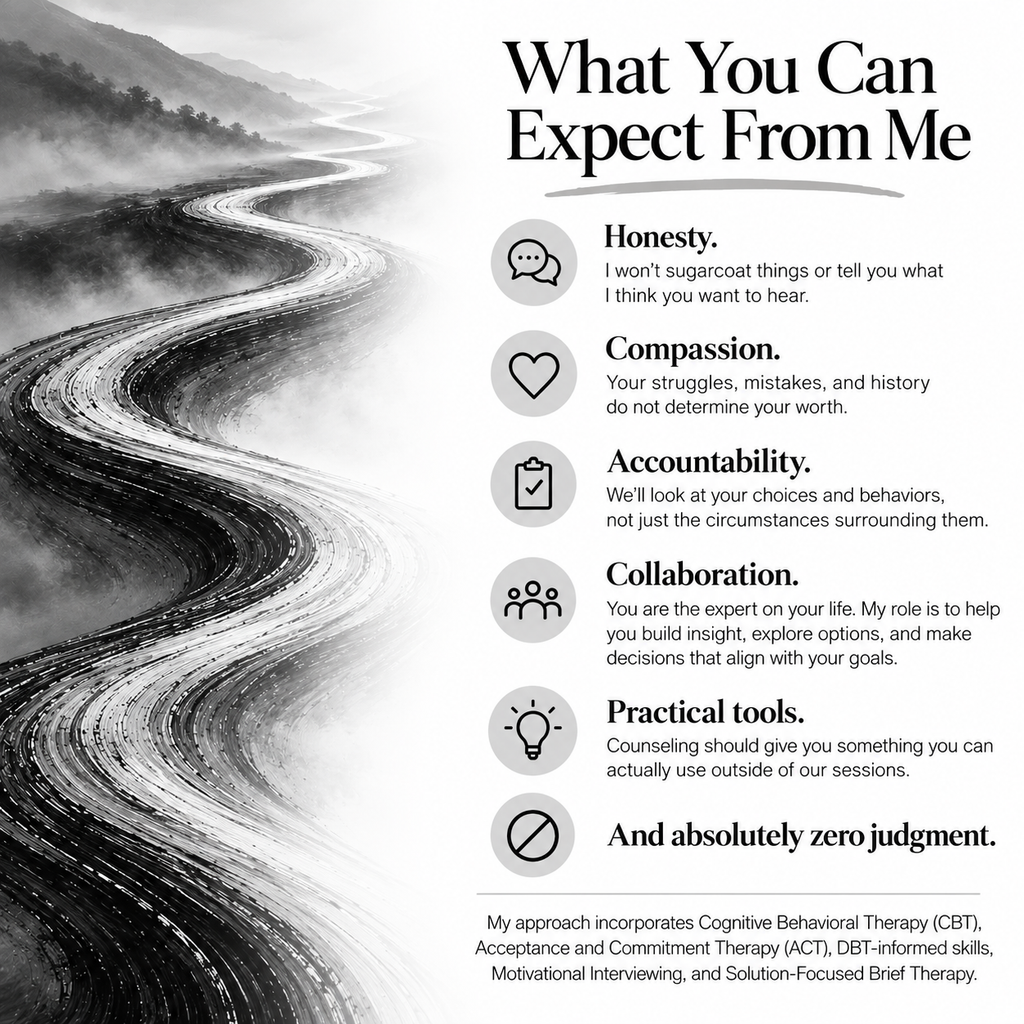
Ready to Stop Repeating the Same Patterns?
You don’t have to be perfect to make progress.
You don’t have to have all the answers.
And you don’t have to be ashamed of where you’re starting.
But if you want something to change, you’ll need to be willing to look honestly at what’s happening and take steps toward something different.
I’ll bring the honesty, compassion, and support. You’ll bring your experiences, your goals, and a willingness to do the work.
Accountability without judgment. Compassion without coddling.